


The future awaits
- steve8125
- Feb 13, 2025
- 3 min read
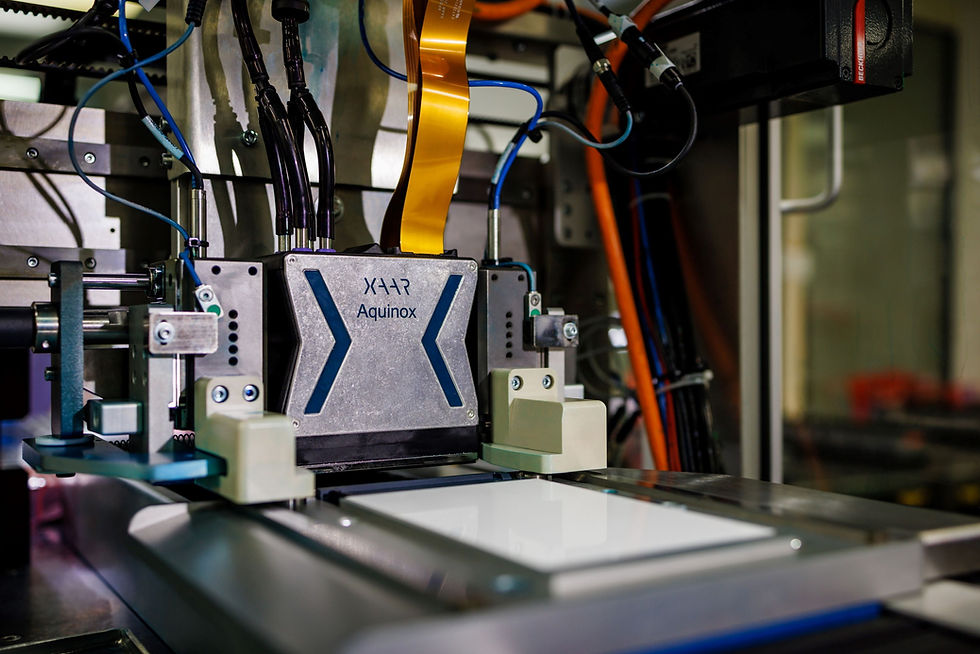
Inkjet is making its presence felt in the world of printed electronics, allowing users to print circuits and devices on different surfaces using specialist inks. As such, inkjet holds a transformative power across various fields.
Printed electronics involve creating electronic components – like circuits, sensors, and displays – through various printing methods. This approach enables the mass production of devices with detailed designs that can fit into many products, such as flexible screens and smart clothing.
At the core of this technology are conductive inks, which can be printed on materials including paper, plastics, and textiles. This flexibility offers several advantages over conventional electronics manufacturing, which often relies on rigid components and complicated assembly.

Printed electronics are rapidly transforming different sectors thanks to their versatility, efficiency, and cost savings.
For instance, smart packaging is one of the most innovative uses of printed electronics. Imagine food packaging that can check freshness or reveal nutritional details through printed sensors. This not only enhances the shopping experience, for both the brand and the customers, but also helps reduce food waste – a critical challenge today.
For example, smart packaging can include connections to detailed product information, menus, brand promotions, or more technical temperature sensitive indicators that change colour when food is past its prime. It is estimated that implementing smart packaging could cut food waste by up to 30%, creating consumer awareness and promoting better choices.
Wearable technology has also become mainstream, and here too printed electronics play a vital role. By printing flexible circuits onto fabrics, developers can integrate technology seamlessly into clothing.
Think of smart shirts that monitor your heart rate while you exercise, or fitness trackers that you wear every day.
The automotive sector is also leveraging printed electronics. They can be found in dashboard displays, sensors for safety systems, and more. Their lightweight and flexible characteristics allow for improvements that traditional electronics can’t match.
By using printed electronics, car manufacturers can reduce vehicle weight, leading to better fuel efficiency. Estimates suggest that for every 10% reduction in weight, fuel economy can improve by 6 to 8%. Additionally, the ability to print on curved surfaces opens up exciting opportunities for design and aesthetics in vehicle interiors and exteriors.
The potential of printed electronics goes beyond new applications; they bring significant benefits to the table, one of the most attractive being their lower production costs. Traditional manufacturing can involve complex processes. In contrast, printed electronics simplify the production process, enabling large scale manufacturing with less waste.
As business increasingly prioritises sustainability, printed electronics are an ideal answer. The technology generates less material waste and often uses eco friendly inks. Additionally, sensors integrated into products can encourage smarter consumption, which contributes to environmental efforts.
The lightweight nature of printed electronics allows manufacturers to incorporate them into products where traditional components would be too heavy or unwieldy. For instance, flexible solar panels can be printed to fit on various surfaces, expanding their application across consumer gadgets and building materials.
Digitally printed electronics also offer faster time to market, with extremely quick turnaround times, and by the nature of the 'single' print technology, it can also be used in the product development stages to mock up future products, quickly, easily and cost effectively.
While printed electronics offer flexibility and cost benefits, they must compete in terms of performance and reliability with traditional methods. Concerns related to conductivity, durability, and longevity must be addressed.
As the market evolves, establishing industry standards and regulations is critical to ensure quality and safety.
With advantages in cost, less waste, time to market, and flexibility, these innovations are set to redefine multiple sectors – from packaging to automotive, from aerospace to pharma.


Comments